
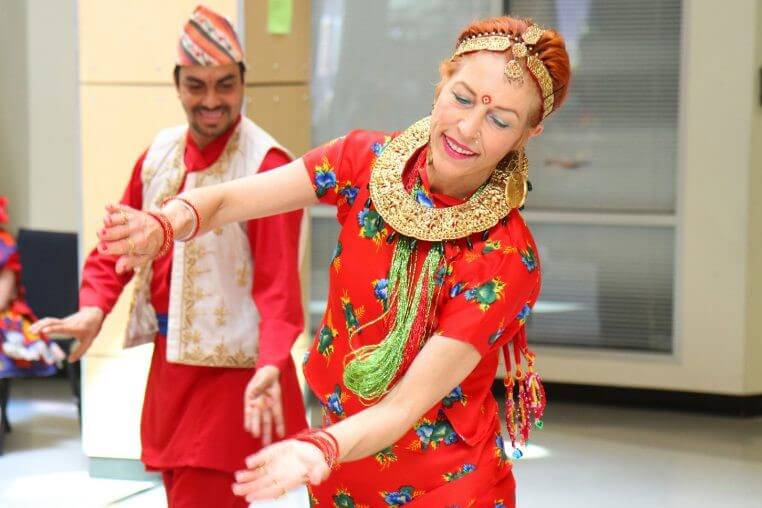
It would be fair to say that cooking and culture are intimately related in Nepal. Most people eat what they produce, however urban populations within the Valley have been heavily influenced by an influx of Tibetans and Indians, as well as Western foods, and therefore tastes are undergoing a certain amount of change. Food, along with religion, is at the center of most festivals and holidays, and there is no shortage of unique traditional dishes to please the most simple to the most discerning palate.
The types of foods consumed depend greatly on one's religious following and ethnic or tribal group. Religious scriptures dictate which foods are permitted and which are taboo. Caste also plays a role in whether or not a family is vegetarian or non-vegetarian. In Nepal, orthodox Brahmins forgo meat consumption. Beef is never eaten, since the cow is both sacred, and the national animal of Nepal.
However, it is fair to say that as economic levels rise in the country, those who can afford other types of meat and fish, all across the social spectrum, will eat it whenever possible. Western influence has also played a role in this with the advent of fast food restaurants, which are very popular with the younger Nepali generation.
Geography determines preferred tastes by what is actually available. In the Terai there is an abundance of tropical fruits and vegetables. In the Middle Hills and valleys, one generally finds rice paddies, along with barley, corn, wheat, and bean cultivation. In the High Himalayas the influence is more Tibetan, with Sherpas inhabiting the land. Their diet is richer in fats to sustain them in the colder climate.
The national diet consists of dal-bhaat (rice and lentils) with tarkaari (vegetables). Food is generally eaten by hand (the right hand only), and water is consumed from a vessel without the lips ever touching the spout. Roti, a type of bread is served along with achaar, or pickle. Momocha, steamed dumplings, are a favorite specialty, as are various snack foods, served with chiura, or beaten rice. Food is well seasoned, though not as spicy as typical Indian dishes.
Tea (chiya) is the typical drink, but stronger spirits, such as raksi, (homemade fermented alcohol made from rice, millet, and barley), and the softer chhang, (from rice, wheat maize, and millet), are widely available.
Ingredients
2.2 lbs of skinless chicken w/fat cut off, cut into 2 in pieces (any part, preferably with bone)
7 oz chopped red onion
7 oz cherry tomatoes (nearly ripe, should still be firm)
0.35 oz grated ginger
0.35 oz grated garlic
Small bunch of finely minced cilantro
½ tsp turmeric
1 tsp masala powder
½ tsp cumin powder
1 ½ tsp salt (or according to taste)
3 bay leaves
3 tbsp oil (preferably mustard oil)
Pinch of chili powder or a dried chili, broken in half
⅔ cup water
Directions
Heat oil in a heavy metal pot or skillet on moderate heat.
Lightly brown the onions.
Add bay leaves and cook for 15-30 seconds.
Add chicken and cook for 5-10 minutes, stirring occasionally.
Add ginger and garlic and cook for 1 minute, stirring frequently.
Add the turmeric powder and stir. Cook for 1 minute.
Add the masala powder and stir. Cook for 1 minute.
Add the cumin powder and stir. Cook for 1 minute.
Add the salt (if desired) and stir. Cook for 1 minute.
Add the chopped tomatoes and simmer for 6 minutes, stirring occasionally.
Cover and cook for 6 to 10 minutes, stirring occasionally.
Add ⅓ cup water, cover again, and cook for 3 minutes.
Add another ⅓ cup water and simmer for 5 minutes.
Sprinkle chopped cilantro over dish and remove from stove. Let dish sit 1 minute before serving. Serve with Basmati rice and eat by hand for the best flavor.
Ingredients
Half an onion, chopped
4 mashed cloves of fresh garlic
1 mashed thumb-sized piece of fresh ginger
½ tbsp turmeric
½ tbsp cumin powder
½ tbsp garam masala powder
1 ½ tsp salt
Pinch of chili powder or dried chili, broken in half
2 medium tomatoes, chopped
2 bay leaves
2 tbsp mustard oil or 1 ½ tbsp ghee
2 cups boiling hot water
Directions
Soak 1 ½ cups mixed beans in cold water overnight. Drain and wash beans the next day.
Heat oil or ghee on medium heat in a pressure cooker (a deep iron pot can also be used, but cooking times will be longer).
Fry chili and bay leaves until browned.
Fry chopped onion until browned.
Reduce heat slightly, add turmeric powder, and stir.
Add cumin powder and garam masala while stirring.
Stir in garlic, ginger, tomatoes, and salt and cover. Simmer for 1 minute.
Stir in beans and cook for two minutes on medium heat.
If using pressure cooker: Add two cups boiling water, cover, and wait until pressure cooker whistles four times, or about 15-20 minutes.
If using iron pot: Add ½ cup boiling water, cook for 10 minutes, and stir. Add ½ cup boiling water and cook for 10 minutes. Add 1 cup of boiling water and cook for a further 10 minutes.
Check bean consistency and taste. They should be soft, but not mushy. If they are not soft, continue cooking, checking beans frequently. If soup is too salty, add a small bit of water and let it come to a boil. Repeat as necessary.
Serve dish on its own or with roti or naan bread and Basmati rice.